Carpet is a filter. Over years it collects smoke residue, cooking grease, spills and moisture, and the pad below it soaks up whatever passes through the fibers. When a seller pulls up old carpet before listing, the smell often gets stronger for a moment, because the pad and the plywood or OSB subfloor are now exposed. That moment is the most valuable inspection opportunity in the whole prep process.
If the source was only in the carpet fibers, new carpet does solve it. If liquid reached the subfloor, or if a damp basement slab has been feeding moisture into the pad, a new installation simply puts fresh, absorbent material on top of the old problem. Within weeks, sometimes days, the odor can return, and now it is in a brand-new carpet that the buyer was told is new.
Reading what is under the old carpet
Look at the exposed floor in good light and smell it close up, especially in corners and along walls.
- IfThe subfloor is clean, dry and smells neutralThenRemove old pad and tack strip, vacuum, and install. The odor was in the carpet.
- IfThere are dark stains on wood with odor coming from themThenClean and treat the stained areas, let them dry fully, and seal with an odor-blocking primer suited to subfloors before new pad goes down.
- IfThe tack strip is dark or crumblingThenReplace it. Old tack strip absorbs liquid and is inexpensive to swap.
- IfStains have gone through the wood or it feels softThenHave the damaged section of subfloor cut out and replaced rather than sealed.
- IfA basement slab feels damp or shows white mineral depositsThenFind the moisture source before choosing flooring. Carpet over a damp slab tends to turn musty.
Before the installer arrives
- Old carpet and pad removed far enough ahead to inspect the subfloor
- Stained areas cleaned, treated and dry
- Sealer applied and cured according to the label
- Tack strip replaced where discolored
- Room closed for a day and rechecked for odor
- Baseboards and the lower few inches of drywall checked, since liquid wicks upward
- Installer told about any treated areas so they are not damaged during installation
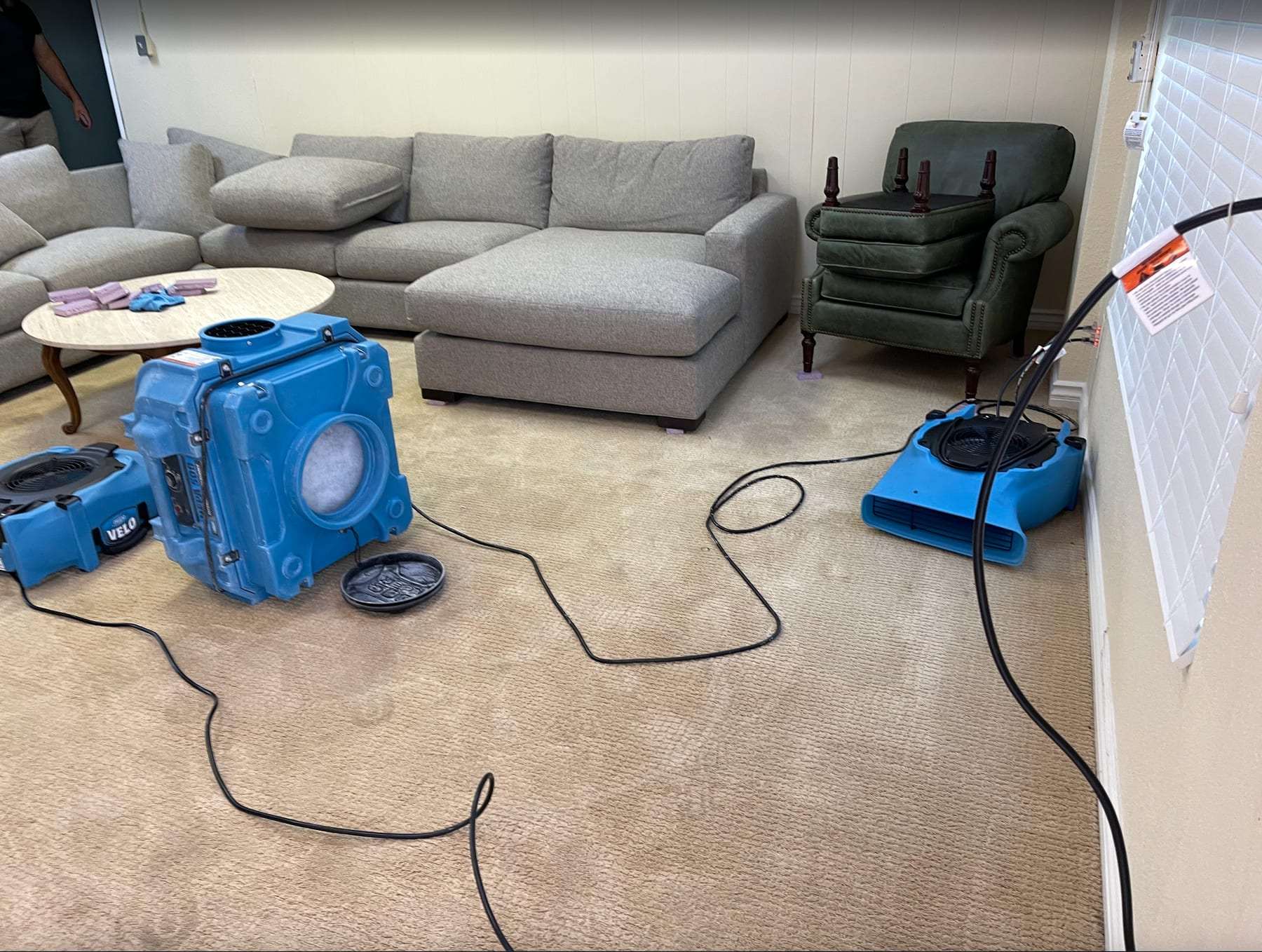
Living room carpet drying with an air scrubber and air movers. Shown to illustrate the work described; not a job for this site or at any address named here.
Common questions
- Is professional carpet cleaning enough instead of replacing?
- For surface soiling and light odor, often yes. For odor that has reached the pad or subfloor, cleaning the carpet alone rarely solves it.
- How long should a sealed subfloor cure before installation?
- Follow the product label and the installer's guidance. Dry, cooler basements may need longer than upper floors.
General information for the Denver area, not a quote or professional advice. In an emergency, call 911.